1122 Virtual Campus: Learning Without Walls
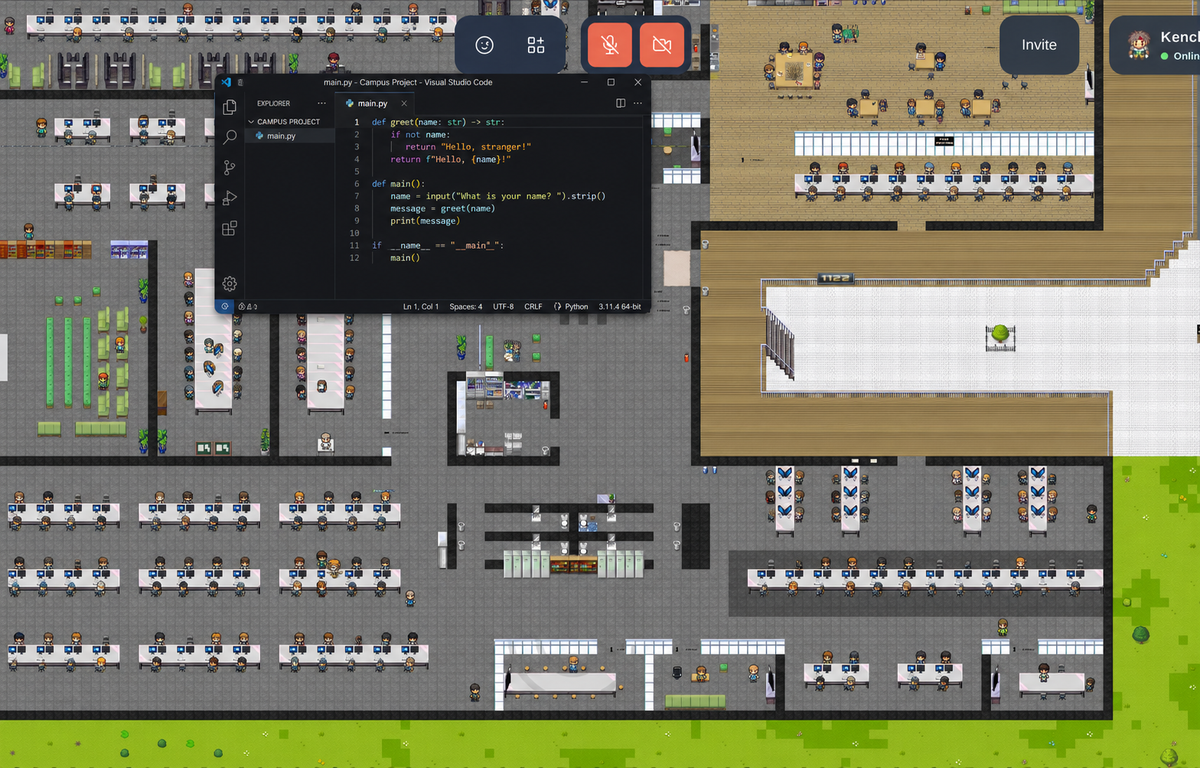
Learning is changing.
And when learning changes, we do not resist it. We adapt, we redesign, and we build the environment that the new generation deserves.
1122 Virtual Campus is not an online classroom. It is not a video-call platform. It is not a place where students passively attend lectures and wait for instructions.
1122 Virtual Campus is a living digital learning space, built around project-based learning, peer collaboration, accountability, and real interaction.
At 1122, we believe that learning happens when students build, struggle, communicate, evaluate, and improve together. The campus is virtual, but the experience is real.
A Campus Built for Project-Based Learning
The 1122 learning model is based on projects.
Students do not only consume content. They solve problems. They build real outcomes. They learn by doing, by failing, by asking, by explaining, and by improving.
In this model, the campus is not defined by walls, chairs, or classrooms. The campus is defined by activity.
A student is present when they are engaged.
A student is learning when they are building.
A student is progressing when they can explain, defend, and improve their work.
The 1122 Virtual Campus captures this reality.
Students are encouraged to be present inside the virtual campus because this is where the learning culture lives. Their attendance, interaction, collaboration, and peer engagement are captured to ensure a better student experience and to support their progress with real visibility.
This is not surveillance.
This is structure.
We want to understand how students learn, where they struggle, when they disconnect, and how we can support them before they disappear from the journey.
Presence Means Interaction
In traditional education, attendance often means being physically present in a room.
At 1122, that is not enough.
Presence means interaction.
Presence means contribution.
Presence means communication.
Presence means being part of the learning community.
Inside the 1122 Virtual Campus, students collaborate on projects, discuss solutions, support each other, and participate in peer evaluations. They are not isolated behind screens. They are part of a digital learning environment designed to make interaction visible, intentional, and measurable.
This is important because technical skills alone are not enough anymore.
Students must also develop communication skills, social skills, teamwork, confidence, clarity, and the ability to explain their reasoning. These are not secondary skills. In the AI era, they are essential.
AI can generate answers.
But humans must ask the right questions, evaluate the quality of the answer, collaborate with others, and turn ideas into real solutions.
That is why the virtual campus matters.
Peer Evaluation Inside the Virtual Campus
Peer evaluation is a core part of the 1122 methodology.
Students do not only submit projects to be graded by a system. They present their work. They explain their logic. They receive feedback. They challenge each other. They learn how to review code, ideas, and solutions with responsibility and respect.
All peer evaluations are performed inside the virtual campus.
This creates consistency, transparency, and accountability. It also allows students to practice one of the most valuable professional skills: giving and receiving feedback.
In the real world, nobody works alone. Engineers review each other’s code. Designers critique each other’s work. Product teams challenge decisions. Entrepreneurs pitch, defend, and adjust their ideas.
The virtual campus prepares students for that reality.
Why Virtual Campus Is the Best Fit for the Digital Era
The digital era requires a different kind of learning environment.
Physical presence has value, but it also has limits. It depends on location, space, transport, fixed schedules, and classroom capacity. It can create the illusion of attendance without guaranteeing real engagement.
The virtual campus gives us something better: measurable participation.
We can see who is active.
We can understand who is collaborating.
We can identify who needs help.
We can create learning communities beyond geography.
We can give students flexibility without losing structure.
This is not about replacing human connection. It is about expanding it.
A physical campus connects people who are in the same place.
A virtual campus connects people who share the same mission.
That is more powerful.
The best student should not be limited by where they live, how far they are from campus, or whether they can afford to relocate. Talent is everywhere. Opportunity should be designed to reach it.
1122 Virtual Campus gives students access to a learning environment that is flexible, scalable, and deeply connected to how the modern world works.
Better Than Physical Presence
The question is not whether virtual is better than physical in every situation.
The real question is: what kind of presence produces better learning?
Physical presence can show that a student entered a room.
Virtual campus presence can show that a student contributed, collaborated, evaluated, asked questions, helped others, and progressed.
That is the difference.
The virtual campus allows us to design learning around action, not attendance sheets.
It offers:
Real-time collaboration.
Structured peer evaluation.
Clear activity tracking.
Flexible access from anywhere.
A stronger digital learning culture.
Better visibility on student engagement.
A learning experience closer to the modern workplace.
Today’s companies are global, remote, hybrid, digital, and fast-moving. Students must learn in an environment that reflects this reality.
At 1122, we are not preparing students for yesterday’s workplace.
We are preparing them for what is already happening.
The Future Campus Is Not a Building
The future campus is not only a building.
It is a system.
It is a culture.
It is a community.
It is a space where people learn by building together.
1122 Virtual Campus is designed for this future.
It gives students the freedom to learn from anywhere, but also the responsibility to stay engaged. It gives them flexibility, but also structure. It gives them access, but also accountability.
This is the balance modern education needs.
We are building 1122 for the AI era because the old model is no longer enough.
The future belongs to learners who can adapt, collaborate, communicate, and build.
And the 1122 Virtual Campus is where that future starts.